 Skip to content

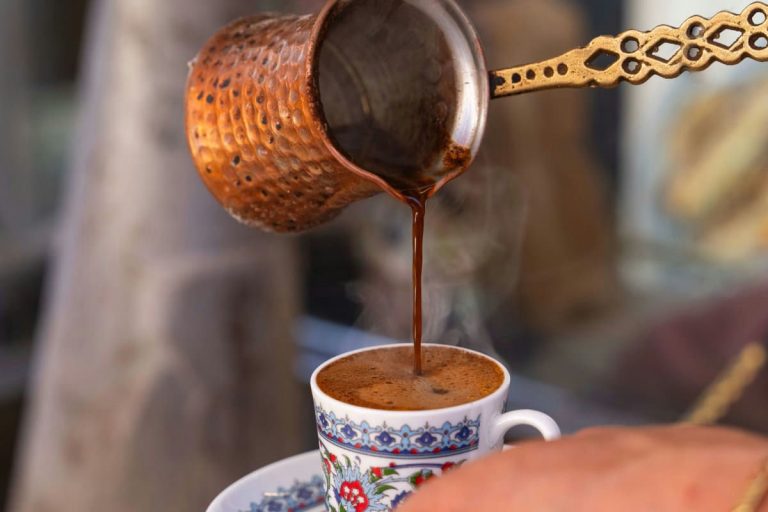
The history of Turkish coffee is a fascinating journey that delves into the deep veins of Ottoman culture up to our days. Emerged in the mid-16th century, Turkish coffee quickly became an emblematic beverage of the Ottoman Empire, creating a lasting impact on the social and cultural way of life. It was in Yemen, under Ottoman administration, that the first coffee beans were discovered and cultivated before being introduced to Istanbul. The spread of coffee in the Ottoman Empire triggered a real revolution. Over the centuries, Turkish coffee evolved to become much more than just a drink. The first ‘coffee houses’ or ‘kahvehane’ appeared in Istanbul in the 1550s, becoming gathering places to discuss politics, literature, and socialize. These coffee houses quickly became centers of intellectual and artistic life of the time, strongly influencing even modern customs around coffee consumption. Turkish coffee is also inextricably linked to various traditions and rituals. The Turkish coffee ceremony, for example, has long been an integral part of weddings, where the bride-to-be had to prepare coffee for the groom’s parents, symbolizing her domestic skills and hospitality. The cultural importance of Turkish coffee extended beyond the home, embedding itself in the mechanisms of public life. Today, the tradition of Turkish coffee remains vibrant, blending historical authenticity with contemporary influences. Traditional preparation methods are still strongly valued, and Turkish coffee remains a symbol of conviviality and shared culture. As the modern world continues to develop, the history of Turkish coffee remains a pillar of culture, offering a window into the rich heritage of the past.
To prepare authentic Turkish coffee, it is crucial to have the right ingredients and traditional equipment. Turkish coffee is distinguished by its specific preparation, requiring extremely fine, almost powdery coffee grounds, finer than for any other coffee preparation. The choice of coffee beans is therefore fundamental; they must be of superior quality, often of Arabica origin. Turkish coffee is prepared with a special coffee pot called a ‘cezve’ or ‘ibrik’. The cezve is traditionally made of copper with a tin lining, although modern versions in stainless steel and ceramic also exist. The specific shape of the cezve, with a wide body and narrow mouth, is designed to maximize flavor extraction while controlling the foam during preparation. On the other hand, sugar is an optional but often used ingredient in the preparation of Turkish coffee. If you wish to sweeten, the dosage must be done before cooking. This allows for a homogeneous mix that will not require stirring after serving. Thus, the coffee can be prepared ‘sade’ (without sugar), ‘az şekerli’ (lightly sweetened), ‘orta şekerli’ (moderately sweetened), and ‘çok şekerli’ (very sweetened). Beyond the basic elements mentioned, spices such as cardamom are also sometimes used for regional variations. Some contemporary blends may include additional spices, but purists often prefer the clean, unadorned taste of coffee and sugar. The cups used, known as ‘fincan’, also play an important role. They are typically small and porcelain, with a capacity similar to that of an espresso. These are often richly decorated, reflecting the importance of coffee in Turkish culture. In summary, the preparation of genuine Turkish coffee requires superior quality coffee beans, an appropriate cezve, sugar according to preferences, and of course a fincan to enjoy this unique drink. This immersion in tradition guarantees an authentic experience respectful of the cultural heritage of Turkish coffee.

Preparing Turkish coffee requires patience and precision. Here is the traditional method, step-by-step, to ensure an authentic and rich flavor experience. 1. Measure and grind the coffee: It is crucial to have freshly ground coffee beans of almost powdery fineness. Measure one spoon of coffee (about 6-7 grams) per cup you plan to prepare. 2. Water measurement: For each spoon of coffee, add a cup of cold water to the cezve. Use a small Turkish coffee cup as a measure to obtain precise quantities. 3. Add sugar (optional): If you wish to sweeten your coffee, add the sugar at the same time as the coffee and water. Three levels are needed – lightly sweetened (az şekerli), moderately sweetened (orta şekerli), and very sweetened (çok şekerli). 4. Mix the ingredients: Before heating, gently stir to fully dissolve the sugar and distribute the coffee evenly. This mixture, however, should not be stirred once the cezve is on the heat. 5. Slow heating: Place the cezve on a moderate heat source. It is crucial to heat slowly to allow the aromas to fully develop and avoid burning the coffee. 6. Formation of foam: As the mixture heats, foam will begin to form on the surface. Do not let it boil; as soon as the foam reaches near the edge, remove the cezve from the heat to prevent overflow. 7. Rest the foam: Traditionally, a good layer of foam is essential for Turkish coffee. Using a spoon, distribute this foam into the cups. 8. Reheat: After distributing the foam, reheat the cezve once again. As soon as the coffee reaches the near-boil point again, remove it from the heat. Repeat this process once or twice to optimize the flavor. 9. Serve: Carefully pour the coffee into the cups, taking care not to disturb the sediment. Allow the coffee grounds to settle at the bottom of each cup. 10. Tasting: Enjoy Turkish coffee with a glass of fresh water to cleanse the palate between sips. Traditionally, it is accompanied by sweet delights such as Turkish delight. This detailed method requires time and care, but the result is a rich, satisfying cup of coffee that represents an ancestral craftsmanship. Once this technique is mastered, you will be able to prepare Turkish coffee worthy of the finest Ottoman salons.
Turkish coffee is not just a beverage but an immersive cultural experience that reflects many facets of Turkish society. Its meticulous preparation and ritual consumption make it a socially charged act full of meaning, connecting individuals through generations and traditions. Known for its central role in the ‘kahvehane’ or coffee houses, Turkish coffee has historically been a catalyst for intellectual and social exchange. After morning prayers, men would gather to discuss political news, debate literature, or play chess. These establishments played a role similar to the literary salons of Europe, serving as a platform for thinkers, artists, and philosophers. In the domestic sphere, Turkish coffee is often associated with moments of conviviality. It is traditionally offered to guests as a sign of hospitality and respect. Turkish hosts take care to prepare and serve the coffee by rigorously following the traditional steps, thereby ensuring a perfect presentation. A good Turkish coffee is a symbol of savoir-faire and mastery of cultural traditions. Furthermore, the role of Turkish coffee does not end there. This drink holds a special place in special events such as engagements and weddings. A custom requires the fiancée to prepare coffee for the fiancé’s family, showing her domestic skills. There is even a game where the future bride adds salt to the coffee for her fiancé to test his character, to see how he reacts to this playful gesture. Coffee moments, often taken with sweets like Turkish delight or baklavas, are also moments for ‘Kahve falı’, the art of reading the future in the coffee grounds, a common practice that adds a mystical and playful element to the Turkish coffee experience. Turkish coffee is also embedded in common linguistic expressions. The Turkish word ‘kahvaltı’, meaning ‘breakfast’, derives from ‘kahve-altı’, which literally translates to ‘before coffee’, highlighting the importance of this drink in the daily routine. In summary, Turkish coffee transcends its daily function as a gustatory delight to become a true cultural institution. It continues to enrich the social, familial, and spiritual life of Turks, consolidating ties through shared rituals and moments of sincere friendliness.
Although the traditional method of preparing Turkish coffee is widely respected, various regions of Turkey have added their own touches, creating unique variations that further enrich the heritage of this emblematic drink. These regional differences and modern influences contribute to the diversity and richness of the Turkish coffee heritage. For example, in the region of Antakya, coffee is often flavored with cardamom, a spice that adds a warm and invigorating aromatic dimension to the blend. This practice is also common in other Middle Eastern countries, illustrating the cultural interactions surrounding Turkish coffee. The city of Gaziantep, known for its gastronomy, sometimes offers coffee served with nuts or dried fruits, introducing new textures and flavors. Another regional variation is observed in the Aegean region, where coffee is sometimes prepared with mastic, an aromatic resin from the lentisk tree. The mastic imparts a distinct and slightly sweet flavor to the coffee, different from the purely caffeinated traditional recipe. Modern influences have also shaped the preparation and consumption of Turkish coffee. Several contemporary establishments add innovative elements such as plant-based milks, vanilla extracts, or even CBD infusions, offering a caffeinated experience to new audiences. Some establishments also incorporate more innovative presentation methods, such as the ‘Jazve’, a more modern and stylized version of the cezve, using high-end materials like gold or silver. Furthermore, global trends of sustainability and health have found their way into Turkish coffee. Organic coffee beans, from fair-trade agriculture, are increasingly popular, reflecting a growing awareness of the ecological and social impacts of coffee production. Even in the field of high technology, Turkish coffee is not lagging behind. Some modern machines allow the preparation of this coffee in a semi-automatic way while faithfully reproducing the traditional manual steps, offering convenience without sacrificing authenticity. Coffee festivals, such as the one in Istanbul, celebrate this diversity by bringing together baristas, roasters, and coffee enthusiasts from around the world. These events are an opportunity to showcase innovations while honoring traditions, confirming the central role of Turkish coffee in a global context. In conclusion, Turkish coffee, with its multiple regional variations and modern influences, continues to evolve while remaining faithful to its roots. This ability to merge tradition and innovation ensures that Turkish coffee will remain an essential and dynamic component of Turkish culture for generations to come.