 Skip to content

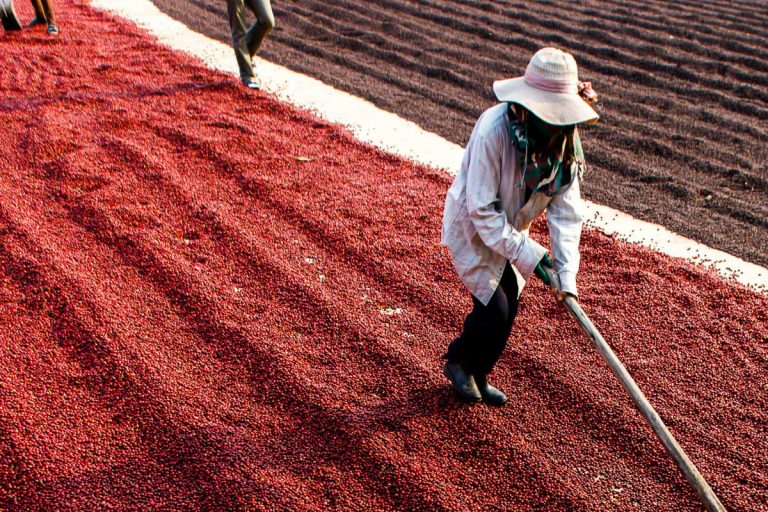
Traditional coffee bean drying techniques are the oldest methods used by farmers in various producing regions. They often rely on natural and manual processes, requiring intensive labor and favorable weather conditions. Here are the main traditional methods: 1. Sun Drying: This method is most commonly used in sunny regions. Coffee cherries are spread out on large flat surfaces, often on concrete patios or raised beds made of wire mesh or cloth, where they are regularly turned to ensure even drying. The process can last from two to four weeks, depending on weather conditions. Sun drying allows for slight caramelization of the sugars present in the coffee fruit, which can add characteristic sweet notes to the final product. 2. Natural Method (Dry Processing): This technique involves allowing the coffee cherries to dry completely before pulping them. The fruits are left intact, allowing the sugars and aromatic components to penetrate the bean. This process can take several weeks and requires constant monitoring to prevent mold and unwanted fermentation. 3. Shade Drying: Rarely used nowadays, this method involves drying the beans under partial shade cover, often provided by trees. This technique slows the drying process and is sometimes used for specialty coffees to enhance certain aromatic profiles. The main limitations of traditional methods include their dependence on weather conditions, the considerable time they require, and the increased risk of contamination by bacteria or mold. However, these methods are appreciated for their ability to produce unique and complex flavor profiles.
Technological advancements have led to the development of modern coffee bean drying methods, aimed at improving efficiency, consistency, and the quality of the final product. These innovations also aim to reduce climate constraints and minimize contamination risks. Here are some of the main modern techniques: 1. Mechanical Drying: Increasingly used in large operations, this method involves the use of industrial dryers. Beans are placed in rotating drums or tunnels where they are exposed to hot air. The main advantage of this method is the strict control of temperatures and humidity levels, which reduces drying time to just a few days. This allows for great consistency and reduces the risks of mold development. 2. Vacuum Drying Technology: This innovative technique uses a vacuum environment to lower the boiling point of water inside the coffee beans. This allows the beans to be dried at lower temperatures, preserving more aromatic compounds and flavors. Vacuum drying is particularly appreciated for specialty coffees where preserving delicate aromas is crucial. 3. Use of Dehumidifiers: In this method, industrial dehumidifiers are used to extract moisture from the ambient air. Beans are spread out in airtight chambers where the circulation of dry air accelerates drying. This process offers uniform drying and reduces the risks of undesirable fermentation. 4. Enhanced Solar Dryers: Combining the advantages of sun drying with modern technology, these dryers are designed to use solar energy while controlling humidity and temperature. They are often equipped with photovoltaic solar panels that power fans for better air circulation. These modern techniques meet the growing industry needs for productivity, uniform quality, and environmental sustainability. They also offer a response to climatic uncertainties by providing more controlled and predictable solutions.
Comparing traditional and modern coffee bean drying methods reveals significant differences in terms of final quality, costs, and environmental impact. Let’s analyze some key aspects: 1. Aromatic Profile and Flavor: Traditional methods, notably sun drying and natural processing, tend to produce more complex and richer flavor profiles. The developed aromatic compounds are often more pronounced, offering sweet and fruity notes. In contrast, modern methods, with their rigorous control of drying parameters, allow for the preservation of delicate and subtle aromas but may sometimes yield more uniform and less distinctive results. 2. Consistency and Uniformity: Modern techniques, particularly mechanical and vacuum drying, guarantee greater uniformity in the quality of finished beans. They limit variations due to unpredictable environmental factors and ensure more regular production. While capable of producing high-quality beans, traditional methods can suffer from higher variability depending on weather conditions. 3. Time and Efficiency: Traditional drying is an extended process that can take several weeks, requiring rigorous management and constant monitoring. In comparison, modern techniques can significantly reduce this time, often to just a few days, thereby improving the overall efficiency and productivity of plantations. 4. Costs: Modern methods require a higher initial investment in terms of equipment and technologies. However, in the long run, they can prove more cost-effective by reducing drying time and improving consistency in quality. Traditional methods, though less costly in terms of equipment, require more labor and can be less predictable. 5. Environmental Impact: Traditional methods, like sun drying, are generally perceived as more eco-friendly as they use natural resources efficiently. Modern methods, while potentially consuming more energy, can also be designed to be sustainable, particularly by using renewable energy sources or minimizing waste. In conclusion, the choice between traditional and modern coffee bean drying methods largely depends on the operation’s priorities, whether it’s the desired quality, cost/time efficiency, or environmental impact. Modern innovations provide valuable solutions to industry challenges while respecting the legacy of time-tested techniques.